Pages

Showing posts with label sustainable farming. Show all posts

Saturday, April 4, 2015

Farm updates

Wester Tent Caterpillars
Today we found these voracious beasts, above, on one of our Satsuma Plum trees. They're Western Tent Caterpillars. They will eat every leaf on a tree, every tree. They especially love Choke Berry. I'll have to find their natural predator and plant some habitat for the good guys.

Megan, Kahena, Henry and I were busy planting hops rhizomes (for glorious beer). Hopefully, in a few months we'll have some Chinook, Willamette, Tettnang, Centennial and Nugget nuggets to make glorious beer (which is glorious).

We intend to build trellises for the vines so they create a natural pergola to dine under--while drinking glorious beer, of course.

Juana's Orange Amaranth. It's a grain
plant and good fodder for animals.
I also transplanted about 50 Juana's Orange Amaranth from the hoop house to the farm. I didn't have water for the sprouts as I was relying on the predictions of Weather Underground that we'd have rain tonight. But by the time I'd dug the trenches, filled with dirt, and lovingly placed each sprout, the weather predictions had changed to clear skies and, ominously, 'may freeze'. 

Water helps plants survive freezes so I bucketed some from a full swale and, well, we'll see who is alive tomorrow.

The boss and her crew

Speaking of untimely demises.., the big gal in the photo above is a Bourbon Red turkey we got about three weeks ago. She (or he, I'm not good at sexing) is the only survivor of a cadre of four. I was warned that turkeys are extra hard to start so I kept the first batch warm, really warm, too warm, apparently. It is enough to say that there are going to be three more little creature souls waiting for me, along with a host of ants and bugs, to explain myself on the other side of the great divide.

Royal Palm turkeys

Here are a couple of the replacements. They're Royal Palms. Some of the problems with heirloom turkeys (heirloom pretty much means not big breasted, not modern industrial breeds) are that they're a lot smaller, take longer to mature and they can fly. But the advantages are that they're smarter, hardier, and some, like Royal Palms and Bourbon Reds, are great foragers.

These turkeys will all be housed under netting, so flying won't be a problem. And they're going on bug patrol so they'll earn their keep.
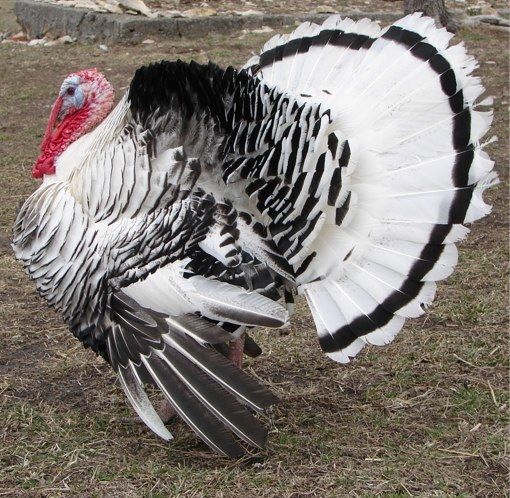
A mature Royal Palm Tom

The surprise was when we put the new chicks in with the older Bourbon Red and she immediately took to protecting them. I was expecting to have to concoct another enclosure to keep them separated until they were old enough to defend themselves, but I got lucky. I think the Bourbon Red was really lonely.

Heirloom Hulless Oats

A couple of weeks ago I planted some hulless oats from Baker Creek Heirloom Seeds. I can't figure out how to rotate the image. Aargh. But the oats have already sprouted. There weren't many in the pack, frankly, but that's what you get when you go boutique heirloom. I'm hoping I can save seed this year, maybe next, and start to build up a stock for the Zombie Apocalypse. 

I'm trying hulless oats because they are supposedly easier to process and are also high in protein, thus covering two necessities: enabling laziness and providing veggie protein.

Friday, March 20, 2015

Lazy Composting

Gardening should neither be difficult nor expensive. If it is then you're doing it wrong (or maybe it's too big).

However, there are lots of companies and websites that will try to convince you that you need stuff that will make gardening both expensive and difficult.

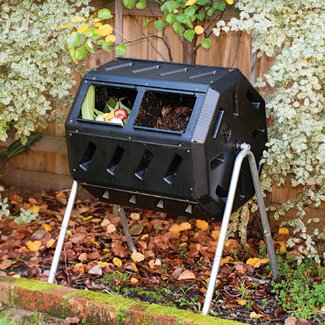
For instance, the big plastic barrel supposedly for composting pictured below.


This thing is useless. It's actually standing where you should be composting, directly into the soil below it. If I had bought one of these I suspect that it would be sitting, unused and decaying, taking up valuable real estate.

For awhile, before I moved to really lazy composting, I did the routine where you have to turn the pile and monitor your compost, add this or that, move this or that. Yeesh--what a waste of time.

I suspect many people have stopped composting simply because the 'experts' have chimed in on how difficult and important it is. Meh. Don't listen.

Here's how we do it:


Just bury your organic material directly in the ground. The worms will eat everything. Your soil will become rich and awesome over the course of a few years.

The hardest part of my composting style is the very first time you do it because it will require digging two holes, one to put the compost from your kitchen into today and the other to put tomorrow's compost into tomorrow. Each time you compost after that you use the dirt from the hole you're digging for the next day to cover the compost you're currently burying.

Dig the holes in succession, in a line, in your garden and over time you will directly compost your entire garden. I have dug holes where I previously composted only months earlier and found nothing but the usual suspects, egg shells (no I don't grind them or do anything to them but bury them), onions and rinds. A year later even all of these are completely gone.

For years I have composted everything organic, and i mean everything--paper napkins, meat, onions, citrus rinds--directly into the garden. I have nothing to show for it but lots of worm poop. And, you know, we love worm poop.

As far as varmints digging up your compost. I use an electric fence and it is one of the best investments in technology I've ever made. But a dog would work, too, as long as you can keep it from the garden.

Wednesday, March 4, 2015

Troops arrive for basic training

I found five little cockerels at Wilco for half price. They are lucky little birds. Normally they would have been tossed into a grinder as soon as they were sexed, but somebody must have thought they were pullets (hens) and sent them to the store where their true nature was discovered. Not sure what the store would have done with them if I hadn't come along looking for troops to chicken the Rooster Picket Bug Kill Zone Garden Perimeter Fortified Area of Defense (RPBKZGPFAD).

As the man at the store said, very absolutely, 'nobody wants cockerels!'

I replied, 'shouldn't they be free?'

No luck, but at $1.50, close.

My Janissaries in training: Two White Leghorns, two Blue Andalusians, One Gold Laced Wyandotte, and two Rhode Island Reds, the latter are pullets to replace my lost Buff Orpington and my Unexpected and Very Expensive Speckled Sussex Rooster.
They're heritage breeds. Without a marketable skill like laying eggs or growing genetically engineered giant breasts, they get, well, decapitalized.

That the boys get immediately killed was one of the ethical dilemmas I faced at the beginning of the chicken head scratching. We can't keep roosters as they're too loud for the neighborhood, plus I need good foragers that are pretty cold hardy--good forager plus cold hardy leaves me with only heritage breeds to choose from.

But for every heritage female I buy a heritage male is going to die. Oofdah, my bruised
conscience.

Cheap Cheeps

The white leghorns massage my ego/conscience the most. White Leghorn hens lay white eggs. White eggs are not sought after by the particular sort of hairless ape that keeps heritage breeds. So, the white-egg-laying White Leghorn cockerel is a lucky bird if he sees day two. Nobody wants cockerels, especially White Leghorn cockerels.

Poor Henry the Unexpected and Very Expensive Rooster, he's going stir crazy. But I can't put him outside. He is LOUD. I take him to the land and let him roam when I have the time or I'm working on the fence. Soon, he'll be in chicken wonderland, though, scratching, eating bugs, and generally Roostering.

We're keeping Henry Rooster in the garage until we get the fencing ready on the farm. Tonight he kicked his stall door open (actually a dog kennel) and raided the place. He hopped up on the top of the chick incubator and broke the heat lamp. We're lucky he didn't kill the chicks.

Work on the RPBKZGPFAD in progress. Electric wires soon.


Tuesday, February 24, 2015

The Farm Blog Begins

Marvelous Wonderful Farm's 2014 Christmas Photo

It's a bit of stretch to call what I'm doing 'farming', though I have a business license, and I'm losing money. But I do hope that I will begin to show a profit in two to three years, so here goes. 

Marvelous Wonderful Farm is my attempt to prepare my family for climate change, to grow healthy food, and, eventually, to show a modest profit. We have five acres in Ridgefield, Washington, about 20 minutes North of Portland, Oregon. We're on a well traveled road, making a farm stand a future possibility.

I am trying to grow food ethically because it seems like a farmer should be at least as diligent with the soil as a Boy Scout is with a camp-sight and leave it better than he found it. I imagine that occasional future posts will include decrying of the fossil fuel intensive, health destroying, water ruining, life killing heavy equipment work that is currently called farming, but I'll keep this blog more about my trials and errors than about the failures of Big Ag.

Let's learn to grow our own food together. After all, if you're dependent on somebody else for food, you're dependent. Better to be dependent on someone you know and trust who is also dependent on you, which is a long way to say that I believe freedom and 'keeping it local' are meaningless without each other.

Rooster Picket Bug Kill Zone, before electric.

An important caveat, though, for any noob farmer: I have land, not much, but enough for one man to farm. Lack of arable soil is the single biggest impediment to starting farming. There are vertical farms and ingenious coops and front yard farmers who rent lawns, and the like, but nothing can really substitute for a few good, south facing acres; and that's what I've got. I say this only to be fair. I know my advantages.

Chris Rush Dudley
Marvelous Wonderful Farm and Film
chrisrushdudley@yahoo.com